13% of The SNR Users Obtain their Certificate Online Thanks to Kushki

Avatar img
Stella Vargas
Líder de contenido @Kushki
diciembre 16, 2019
Lectura de 2 minutos
13% of The SNR Users Obtain their Certificate Online Thanks to Kushki

Thanks to Kushki's digital solution for the Superintendency office, Ownership History and No-Lien Certificates can now be downloaded in the comfort of users' own home in less than a minute.

The Superintendence of Notary and Registry (SNR, in Spanish) is a governmental organization and the supreme authority for real estate registry in Colombia. They serve a large number of citizens who want to obtain their Ownership History and No-Lien Certificate (CTL, Certificado de Tradición y Libertad), and issue around 23,000 to 75,000 CTLs every day.

This document contains all the historical information of a property and its owners and it is in a high demand because it is required to buy or sell real state, apply for mortgage credits, perform structural changes in properties, support revenues, and even for resolving legal disputes.

Previously, the only existing payment method for this procedure was cash. As a result, users had to go to a Public Instruments Registry Office (ORIP, in Spanish), with the property registration number and pay to obtain their document. This made the process slow and tiresome for users, because it took up a lot of time and money for transportation, they had to make long lines, and there were informal advisors who resold CTLs at a very high price.

An Ally for Progress

Some traditional or governmental companies do not have the possibility of opening certain channels or launching some initiatives, because of the multiple priorities and responsibilities they have to deal with. This without mentioning the cost and training that digital transformation requires, complicating technology management for some of them.

The SNR belonged to this group of organizations. However, (and despite these limitations) they wanted to improve their services and the general experience for both their users and their employees. In this case, Kushki took the control of the process from end to end, simplifying it, making these services provision digital and generating new payment methods.

Results

Once Kushki created a payment channel for credit cards and PSE (payment method by wire transfer and checking account), new doors were opened for SNR´s users. Now, the whole process to obtain an Ownership history and no-lien Certificate can be done online, and it takes only one minute. In total, 13% of the certifications are generated through this platform, thus reducing in-person procedures at the Superintendency of Colombia offices.

Additionally, real estate agencies and private entities can request multiple certificates at once quickly and easily, simplifying the process for them as well. In this way, many of them decide to opt for massive downloads, using the credit card payment benefit.

Ownership history and no-lien Certificates can be obtained at www.certificadotradicionylibertad.com

This results in a more fluid and efficient work for the SNR, and increases benefits for their users, as they don't have to resort to informal channels, and have a greater control over their time. Likewise, the process is more convenient, because it can be performed from anywhere, and it offers multiple payment options: credit card or wire transfer through the SNR's page, or cash for those people who still decide to go to the SNR offices.

Be the life of the party with the latest information on digital payments.

Subscribe to our Kushki Hub to receive alerts about our new content.

Suscribe illustration
Don't know which product is right for your business?
Does the world of payments catch your attention?

More about our kushki Hub

Payment Trends for 2020

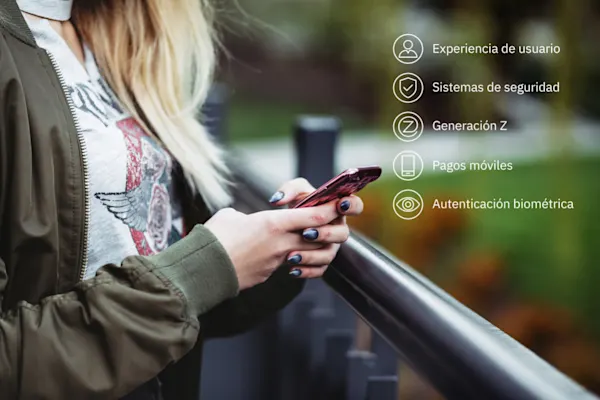
Payment trends for 2020 seem to be extremely focused on consumers and in providing them with a convenient, safe and seamless experience. This will become a focal point to decide which strategies businesses will use and the payment methods they will implement. User Experience Payments are one of the leading figures in the trade and customer service scenario. Today, users want control, speed, convenience and security. Basically, payment processes should be seamless, giving consumers the power to pay as they want, whenever they want and from wherever they want. A consequence of the increased use of internet for purchases of goods and services (especially from smartphones) and the reduction in the use of cash is that customers not only want to have multiple payment options at their disposal, but also expect them to be convenient and safe. Any business lacking these characteristics risks losing their relations and reducing customer preference. Improvement in Security Systems We are going through an era of innovation and fraudsters are not lagging behind. Accenture estimated that the banking industry lost around $31.3 billion dollars in 2018 due to credit card fraud. Users are becoming increasingly aware of these criminals, so they choose brands and businesses that can provide them comfort and usability, in addition to protection for their information. Thus, businesses have the option to apply measures that range from tokenization, as Kushki does, to artificial intelligence for detecting and stopping fraud. It is important to note that security is one of the most relevant trends for 2020 and for the future. Payment systems must be extremely practical but also safe, and having one feature must not imply sacrificing the other one. Generation Z The increasing need for speed in the implementation of changes for payment methods and for innovation emerges from a generation of consumers who grew using smartphones and digital technology. Generation Z (Gen Z, born between 1996 and 2010) demands immediacy and efficiency in the services they acquire. According to Fast Company, by 2020 Gen Z will represent a 40% of the consumers in the United States, and according to Forbes, they have a $44 billion worth of purchasing power. These numbers show us that, regardless of the business location, Gen Z is a considerable group of consumers that should be kept in mind, since they will determine which businesses will survive in the future and which will perish. Increase in Mobile Payments In the last few years, cell phones have become an essential part of our lives, to the point that many of us feel that it's impossible to function without them. They are not only our phones, we also use them as our music and video game players, our calculators, GPS, digital planners, our email managers, our libraries, clocks, alarms, etc. And soon, they will also become our digital wallets. The introduction of APIs that enable the creation of utilities for our mobile phones makes it increasingly convenient and simple to pay things using them. Additionally, the use of apps such as Uber, Rappi, and Netflix have shown us how simple it can be to access services instantaneously. For these reasons, many efforts are being made for improving users' payment experience through cell phones, making it more flexible, convenient and immediate. Banks are working on their mobile technology to offer their customers full control over their accounts through their apps. On the other hand, digital wallets created for saving all credit and debit card information, gift and loyalty cards are becoming increasingly popular. Biometric Authentication Because of the increase in digital payments and the use of technologies with access to our microphones, cameras, and fingerprint readers, the possibility of biometric authentication has become a reality. Thus, digital businesses are beginning to integrate tools ranging from fingerprint and voice recognition, to facial and iris recognition, which help in streamlining authentication processes while increasing the efficiency and security of the service.
Avatar img
Stella Vargas
Líder de contenido @Kushki
diciembre 05, 2019

Fintech. The Transformation of the Financial Industry

Fintech: The transformation of the financial industry Fintech is the innovative use of technology in the design and provision of financial services. It has the power and potential to change the banking dynamics as we know it. This is can be achieved with the introduction of artificial intelligence, loans between private individuals (peer-to-peer), big data, blockchain, robo-advisors, and digital payments (by participants such as @Kushki), among others. In fact, by 2016, Henri Arslanian, in his TED Talk at Wan Chai, explained that we are going through one of the biggest transformations in the history of finance, and the greatest impact will be suffered by bankers because, in the future, their positions will need abilities, knowledge, and personal skills that are very different to those required now. Now that we are near 2020, it is a good time to retrieve the message of his talk. Henri Arslanian is the Asia leader of PwC FinTech & Crypto, Chairman of the Hong Kong FinTech Association, and Deputy Professor at the University of Hong Kong. Technology Sets Higher Expectations According to Arslanian, historically, banks were quite good integrating these new technologies to provide a better service to their users, but after the financial crisis of 2008, they were too busy dealing with new regulations and requirements, so technology was not a priority anymore. At the same time, some of the most impressive innovations became part of our day to day: iPhones, Airbnb, Uber, WhatsApp or WeChat are some examples. Their use created a gap between what the banks could provide, the user experience and the level of convenience that consumers wanted to have. Such a gap started to widen so much that even entities that were never associated with traditional banks wanted to enter the business and seize this opportunity (especially technological firms). For example, by 2016, Facebook already held about 50 regulatory licenses only in the USA, which now allows its users to transfer money through their messenger app. Amazon also started an experiment offering student loans, and Alibaba's financial division has become one of the biggest funds in the world. Likewise, WeChat has become one of the most common tools to transfer money, and additionally, it supports functionalities such as purchasing insurance policies, investing in funds, booking medical appointments, getting a taxi, donating money to charity and even finding a date mate, all without exiting the application. With many stakeholders offering such possibilities, the future of financial platforms will not be led by traditional banks but by technological firms; so, today's children will more likely open their first account through Facebook or Apple, and not in a bank. Now, fintech startups can offer products that could only provided by traditional banks before. People can obtain loans through peer-to-peer lending platforms, and they have access to robo-advisors providing asset management services that are more transparent and considerably cheaper than other alternatives, among other things. A New Banking Model Led by the “Newcomers” Additionally, these “newcomers” (startups) may choose only the parts of the banking industry that they want to cover, usually selecting the most profitable ones. Thus, startups usually prefer to deal with front end activities or customer support areas and leave to traditional banks those boring back end activities. This could create a new model in which traditional banks would become providers of basic services for these technological firms, while fintech startups would be the ones that control users' experience. A Solution for Debanking This revolution brings many positive aspects; financial inclusion is one of the most important. Currently, more than 2 billion people in the world have never used bank services. These people do not have access to savings accounts, and they cannot obtain loans for their studies. They save their money literally putting it under the mattress, thus perpetuating a vicious poverty cycle. This is not a problem only for developing countries; for example, in the USA, at cities such as Miami and Detroit, more than 20% of households are not banked. The good news are that, for the first time in history, this part of the population could have access to financial services. According to the World Bank, between 2011 and 2016 more than 700 million people went from being unbanked to be banked. This is only the beginning of an industry that is continually seeking to transform the way financial services are provided to consumers, improving users' experience. Additionally, they offer more accessible options from the costs point of view. Former call centers are already starting to be replaced by artificial intelligence: powerful chatbots that emulate human conversations and messaging apps. Likewise, the use of passwords is being replaced by biometric information and voice recognition. All of this, to provide financial services to millennials in a more enjoyable way. A Mindset Change will be Necessary Arslanian mentioned a study that revealed that more than 70% of millennials preferred going to the dentist to hearing what their banks have to say. This is a concern for banks, because they are now starting to understand that the scenario is changing, and that they will have to evolve to survive. Citibank estimates that in the next 10 years, 30% of bank jobs will disappear. Some experts even say that it might be a 50%. This would bring serious consequences because it would not only affect the financial industry, but other sectors related to it, from legal and accounting firms to hotels and restaurants. Of course, fintech companies will generate jobs, but they will require different abilities, as they will seek creative designers and programmers, instead of businessmen and compliance officers. So, instead of sitting back and waiting for the government to formulate new policies and regulations to adapt to the new reality, the fintech community will also have to work to shape this new ecosystem, to ensure that the change process happens in the best way. But that's not all, this implies a mindset change, especially for parents, who should feel more comfortable with the idea of their children joining startups and starting their own business, instead of searching for stable jobs in banks. Arslanian also says that he teaches the first university fintech course in Asia because he believes that it is unacceptable for students to graduate in finance without having any knowledge in technology. Likewise, he considers that the curriculum of finance and business careers should include design thinking, coding and product development, as creative programmers and thinkers are the ones who will shape the future of this industry.

Avatar img
Stella Vargas
Líder de contenido @Kushki
noviembre 28, 2019

Simplifying concepts in the world of online payment channels.

Do you want to join the world of online selling but have difficulties understanding how it works? We know that it is not always easy: Without experience, this world is full of terms that are complicated. We want to simplify things for you, that your company can continue growing and join the online world. This is why we have prepared an article with the basic concepts and key agents of the industry. Acquirer An acquirer is a financial institution authorized by banks and companies such as Visa or Mastercard to manage the credit and debit cards that are used in a country. They are responsible for establishing affiliations and commercial relations with businesses that want to sell online or offline and receive payments using credit or debit cards by administering them. API (Application Programming Interface) It is a set of codes, functions, commands, and protocols that are used to create and incorporate a software to another, to a program, or to allow app communications. APIs are really useful for programmers because they help them to integrate applications without having to code from scratch. Customer Acquisition Cost and Customer Life Cycle (Lifetime Value: LTV) The Customer Acquisition Cost (CAC) and the Customer Life Cycle (CLC) are two indicators that will help us to know if we are really obtaining profits of a customer. This will show us whether our efforts are generating the results and the profitability that we were expecting. Basically, the CAC represents the expense or economic investment necessary to attract a new customer. On the other hand, the CLC shows the potential revenues derived from a customer during the time that customer remains with us. It's important to keep in mind these data because if the CLC exceeds the CAC, we will know that the strategies and actions that we are taking are the correct ones to generate profit. Issuer The issuing bank is responsible for issuing credit or debit cards for persons in the name of the big franchises or networks (Visa, MasterCard, etc.). It is an intermediary between consumers and card networks. So, issuers can be banks, financial institutions, savings and credit associations, governmental institutions or retailers. Merchant Discount It is a commission that an acquirer charges to shops for processing the payments that are made using a credit or debit card. Merchant discounts vary according to the volume of transactions at each business, the average amount of those transactions and the type of industry to which each company belongs. The revenues obtained through merchant discounts are distributed entirely among the issuers according to the number and amount of transactions made through the acquirer. Neobanks Neobanks are a new generation of financial entities that operate exclusively online. They were created having a young audience (millennials mainly) in mind, conceived for being accessed online. They provide accurate and updated information on expenses and perform money transfers in a quick and simple way by using biometric security and artificial intelligence. PAN (Primary Account Number) It is also the payment account number; it refers to the number that appears at the front of payment cards (credit, debit, virtual or prepaid). It is usually a 16-digit number that identifies the issuer or the issuing financial entity and their country; the rest of the numbers correspond to an internal code to identify the cardholder. Online Payment Gateway It is a service that helps businesses to implement a payment system in online stores to facilitate money collection through the internet. A gateway makes information transfer between a store or online service and the processor or acquiring bank simpler, quicker and safer. From the end customer's perspective, this may involve a better experience at the time of making a purchase. Point of Sales or POS POS are the credit, debit or prepaid card readers that can be found in businesses and through which payments are made. PCI-DSS “Payment Card Industry — Data Security Standard” refers to a security standard that businesses or shops must follow to ensure that the credit card information entered by their customers is protected. This standard was created to keep control over data processing and reduce credit card fraud rates. Phishing It is a bank fraud, in which the fraudster sends an email trying to mislead a person impersonating a bank entity in order to obtain confidential information from the victim. It can be data such as card numbers, usernames, bank account passwords, and any other information that allows fraudsters to withdraw money from an account. Payment Processor They are institutions that offer information services for routing, authenticating, registering and liquidating transactions made through the internet. It is a system or a tool that allows us to buy and receive payments online. We can differentiate two types of processors that fulfil this role. Acquirer processor: It determines if the POS and the business are enabled to receive payments using a card and send the necessary information to the next processing stage through a switch. Issuer processor: It performs credential validation and determines whether there are enough funds to cover payments at the financial institution associated with the transaction. SDK “Software Development Kit” An SDK is a set of tools in an installable package used for the creation of applications for a specific technological environment. They can be used for developing hardware platforms, computer systems, video game consoles, operating systems, etc. Payment Switch It is a set of architectures and applications that supports the operations demand between services customers and the service offerors. Payment switches operate by using security mechanisms for the transferred information, process flows, business rules, etc., which help in the recovery, tracking, and continuity maintenance of transaction services. Cardholder In bank jargon, the term cardholder refers to all those people who have one or more cards, either debit, credit or prepaid. Debit Card Debit cards operate jointly with the user's bank account and money is debited automatically when a purchase is made in a store or money is withdrawn from a cash machine. They can only work with checking accounts, demand deposit accounts and sight deposit accounts, so they can only be issued by banks. Credit Card Credit cards are physical identification methods, issued by financial (banks and savings and credit cooperative societies), or non-financial institutions (businesses, supermarkets, and insurance companies), that operate as funding mechanisms. By using a credit card, users can purchase items at shops, “borrowing” money up to a certain limit determined by the card issuer. Then, the user has the choice of paying the debt monthly or in installments. Attrition Rate (also Churn Rate): It is the percentage of users who cancel a subscription to a service or a product, or drop out from an activity that they were doing (for example, abandoning the shopping cart in an online store without completing the purchase). It is related to customers' loyalty, and it is used as an indicator to know if the actions implemented are providing positive results, or if it is necessary to rethink the strategy. Conversion Rate Conversion Rate (CR) is one of the most important metrics for e-commerce retailers, and it is used to measure results of the plans implemented. It is calculated by dividing the number of actions taken by users (this could be downloading a material, signing up to a service, requesting a budget, subscribing to a newsletter, etc.) between the number of visitors to the website and multiplying that figure by 100. For example: (145 enrollments / 500 visitors) × 100 = 29%. Interchange Fees Interchange fees are a payment from acquirers to issuers, normally defined as a percentage of the transaction amount. It is a compensation for the value and the benefits received by merchants for the right to opt for a credit or debit card payment. Tokenization It is the process of converting a card number (PAN) in a code of random characters (token) to protect a customer's sensitive data and prevent computer pirates from stealing their information to commit fraud. At Kushki, in addition to making online payment integration easier through gateways, we offer useful tools for online commerce, such as administration panels and innovative payment modalities that banks cannot offer. Was this information helpful? Please leave your comments and suggestions below!
Avatar img
Stella Vargas
Líder de contenido @Kushki
noviembre 14, 2019