From startup to scale up: How the entrepreneurial mindset helped me scale a business

Avatar img
Oscar Quevedo
Country Head de Chile y VP de Marketing @ Kushki
noviembre 05, 2020
Lectura de 2 minutos
From startup to scale up: How the entrepreneurial mindset helped me scale a business

From startup to scaleup: how an entrepreneurial mindset helped me scale a business

The last time I wrote, was on the big step we took in our entrepreneurial journey: Selling our startup, and start walking along with a regional and much larger payment gateway. But, before that, we already had some time in the game with different businesses, some successful and others not much. The mentality and resilience generated in all these years of entrepreneurship struggle, has served the team and me to be able to flow in highly changing, dynamic, and challenging environments.

Everything has happened fast with a bit of an impact, but if there is something we have learned, it is that it is very different from creating a local startup than scaling a regional business. One does not happen without the help of the other: The entrepreneur's path gives you the tools, and most importantly, the mentality to make a company grow quickly.

The basics

A startup is a small institution or company driven by a basic principle: Solving unsatisfied needs in society. And not by chance, because these natural needs are the ones that are precisely generated, because big institutions are not able to adapt fast enough to the changes we live on from day to day. Additionally, startups use new technologies, and their differentiating element is their ability to move fast. Which is the great objective of startups? Finding a market fit product, that is, a product that solves a market problem.

This is when the turning point comes. It is that moment when the market needs more of your product than your small company can provide, where the first big Black Swan has generated: An unpredictable event that is out of normal. What does all this mean? The startup takes off, and becomes what many call a scaleup or high-growth firm.

A scaleup?

Surely, you are wondering what that concept is. A scaleup is an institution that has growth as its only objective. According to organizations such as the OECD or Endeavor, these types of companies are the ones that really generate impact in countries, and improve economies by providing numerous jobs. They are defined as those having at least 10 formal workers, who have experienced a cumulative growth rate of at least 72% for three years in a row (or a 20% average annual rate).

Scaleups use their product and their already validated business model, to grab the largest share in the market. But they have something of a startup too, since they seek to maintain agility to be able to adapt to a sharp growth as well as possible. They are what Google, Amazon, Tesla, and many more were some time ago. Ambitious in their essence, they want to break barriers and tend to monopolies. For that, they use financing, technology and human capital. Everything to maintain exponential growth.

It sounds like chaos and, to a certain extent, it is. But it is good chaos, of the kind that achieves genuine solutions to dynamic problems, which are becoming larger and bigger. It is the type of chaos that takes the best of some, inviting others to adapt or take a step to the side. And there are multiple variables in this stage: We work to systematize the processes that were made manually in the startup phase, in scaling sales to increase our reach, in strengthening our product to respond to new demand, in structuring the culture to attract the right talent, and in increasing the sense of belonging of new people joining the team.

It is a moment of change of priorities, where the question is moving from how we obtain more resources (money, advisors, talent), to how we can use those resources to generate greater impact.

Scaling without dying in the process

To grow this fast, the institution has to achieve adaptation in good way. In a dynamic and fast environment like this, that is achieved by delivering a sense of belonging to the people we work with. It is important to generate autonomy because, along with growth, roles are changing, and responsibilities increase.

There is a point where you welcome new partners every week, and things out of our control happen and happen. The clearest example is the Coronavirus pandemic. It is something that needs to be dealt with, and fast. There is disorder and there is chaos, but of the type that generates results, motivated individuals and, more importantly, those happy with their work. As in everything, there are good days and bad days, that is what makes it exciting.

Founders are no longer the only ones that create dynamics and make decisions. In that growth, there are several validated models to achieve market participation and continue developing a scalable product. But independent of the strategy, there are essential aspects that need to be addressed:

  • First, the key point to be able to grow: Financing. Scaleups use external resources to leverage their exponential scaling. If the company decides not to have external financing, it slows its growth. There is nothing wrong about it, only that it would not be a Scaleup.

  • Second, culture. As scaling happens quickly and challenges are increasing, it is important to maintain the soul of the startup you once were. If there is no clarity of that, it is easy that your values and objectives start blurring in the way, and that your decisions are inconsistent with that.

  • Third, contracts, one of the biggest challenges. It is key to have resilient and dynamic people, that have the ability to adapt to changing environments. This is not for everyone, and that is fine; one must only know how to recognize it when expanding the teams.

  • Fourth, chaos management. A little chaos is positive, it gives dynamism to the working environment, and helps to continue progressing. The important point, is to have it under control, and develop tools that allow each to do their work in the best way, even in chaotic moments.

And finally, there are many questions on which I do not have the answer. Nobody is born knowing how to scale a business. Questions are thousands, and they are pilling up in the way, but always with a clear objective: Achieving cohesion in the team to release its potential, thus achieving the greatest impact possible, helping our region to develop.

If you like traditional businesses, the structure and the known, working in a scaleup is not for you; but if challenges call you, changing environments encourage you, and you flow in change, I cannot less but recommend you working in a scaleup, that will fill your life with emotion and innovation.

Be the life of the party with the latest information on digital payments.

Subscribe to our Kushki Hub to receive alerts about our new content.

Suscribe illustration
Don't know which product is right for your business?
Does the world of payments catch your attention?

More about our kushki Hub

Regulation that attracts investment: This is how countries in the region advance in their respective Fintech Laws

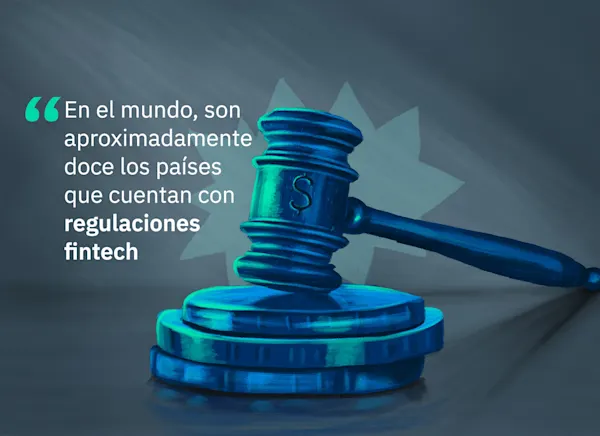
This is how countries in the region are progressing with their respective Fintech Laws It is not rare that, once the creation of companies starts booming in some industry, a law to regulate and control its activities emerges. The case of fintech is no exception: These companies are taking the lead of the race towards the digital economy, mixing finances with technology, and bringing financial products to all people. So much, that the history of fintech has no match in the world: There is no market that has grown as fast as this in the technological industry records, reaching an investment of more than USD 110 billion globally only in 2018. That same year, the industry had 112.000 created fintech companies. Although some ensure that regulation can be a booster for certain industries, others warn that care must be put when laws are very restrictive and do not allow growth. In regulation worldwide, the scope is broad, and there are approximately 12 nations that have legislation in these areas. Countries such as China and the United Kingdom have chosen to create new laws that regulate the use of these technologies in their financial systems. In the United States, instead, they have decided to act reactively, that is to say, modifying rules that already exist. What happens in our region? As in a school grade of teenagers, there are students of all heights in Latin America. Some, like Mexico and Brazil, are more advanced than others. In fact, these two countries are the ones that, almost competing, enacted fintech regulations at the same time. Nonetheless, experts point out that Mexico is the only country that has a comprehensive and non-biased regulation. In March 2018, Brazilian fintech regulation introduced two new types of financial institutions through electronic platforms: direct credit companies and peer loan companies. In April 2019, regulation included the implementation of an open financial system, which is known as “open banking”. That regulated environment has proven to be a boost for investment: According to KPMG, Brazil registered a record investment in the industry of USD $555 million in 2018. Mexico was also one of the most precocious ones: Since March 2018 they have a Fintech Comprehensive Law, although it only entered into force in September of that same year. This, although several fintech companies already existed in the country, which had until September 2019 to request their official authorization under the new law. With the pandemic, the National Banking and Securities Commission (CNBV) suspended authorization processes and left 80 fintechs on the waitlist. But, in August 2020, the process was resumed, this time in a 100% digital way. The law itself includes the regulation of four figures: Crowdfunding, cryptocurrencies, APIs and regulation sandbox. Another of the most advanced, although not yet having comprehensive legislation, is Colombia. Its regulation is in charge of the Ministry of Finance, through the Financial Regulation Unit (URF) and also by the Financial Superintendence. Up to now, they have taken legislative steps to give entry to electronic deposits, to allow financial crowdfunding under certain rules, and to allow the arrival of the robo-advisor to the consumer. Also, the Financial Superintendence has created a regulatory sandbox. What does this mean? A sandbox is an experimental space, which allows certain companies to temporarily operate in a legal manner, with the idea that they test their solutions in an environment approved by the controllers. No specific law In Ecuador, although a positive view from the Banking Superintendence towards fintechs has been noted, there is not yet a law that is precisely focused on these companies. In 2017, the Monetary and Financial Policy and Regulation Board issued the general rule that regulates the definition, qualification and actions of auxiliary services of the financial sectors. That gave some fintech companies an opportunity to regularize and obtain authorization in an official way. Since there is no specific regulation, fintechs must adhere to the laws applicable to all companies of a financial nature. There are two sectors: The private financial sector (banks, financial services and auxiliary services entities), and the popular and solidarity financial sector (savings and credit cooperatives, communal banks, savings and loans associations and centralized funds). Unlike their neighbors, they do not have a regulatory sandbox yet. It is this lack of specific laws which precisely slows fintech's processes, which have been forced to adhere to financial laws that often do not apply to them. A little further behind Both Chile and Peru have demonstrated their intention to advance in fintech legislations. That is why both countries have a high activity in the industry. In Chile, the last measurement of Finnovista's Fintech Radar of Chile, had 112 fintech companies in mid-2019. In Peru, the growth these types of companies have had, exceeds almost all of its neighbors, registering a progress rate of 256% between 2017 and 2018. In May 2019, the Peruvian Government sent to the Congress a Crowdfunding bill to offer greater security to investors and consumer protection. The bill states that collective financing platforms can only be managed by companies based in Peru, and authorized by the SMV securities regulator. For now, it is that fintech side the one that has regulation in the Peruvian nation. A little lower in the continent, Chile has been discussing the topic of regulating fintech companies. In April of this year, the Government announced that the Fintech Bill would be admitted to Congress in mid-2020, in a process that would be led by the Ministry of Finance. However, with the impact of the pandemic, little has happened in that regard, and the Government has pointed out that the matter is stalled. “They told us that the matter had been put on hold, since it is not part of the list of most urgent priorities,” says Ángel Sierra, executive director of the Fintech Companies Association of Chile (FinteChile). A win-win For many, fintech legislation can be beneficial to governments. The truth is that, according to international experience, it has been shown that good regulation can be a win-win for all. A Fintech Law which is well-developed in each country: - Guarantees and promotes good functioning of the industry - Protects users of these services - Fosters investment, since for investors it is safer to risk funds in a country where there is a strong regulatory framework. If something has been made clear by the pandemic, is an urgent need to move towards a digital economy. Companies such as dLocal, Rappi and Kushki are breaking those barriers, where regulation plays an important role: It can make them take off or brake them hard. The case of Mexico is a positive example: Two years after the creation of its Fintech Law, the country has registered a record investment of almost USD 1.3 billion in 2020, that is, 16% of regional investment. In addition, it must not be forgotten that an industry that grows at this pace is a strong generator of qualified employment and labor dynamism, which something that, with the ravages of the pandemic, and more than 41 million unemployed people in the region, is more relevant than ever. As Kushki, we want to push the evolution of the fintech industry. That is why we hope that regulation in Latin America will accompany the development of all companies, which, as we do, seek to break paradigms, bring financial services, and ease the lives of all people who live in one of the least banked regions up to this day.
Avatar img
Magdalena Ovalle
Líder de Comunicaciones Internas @ Kushki
octubre 27, 2020

Wego and Kushki: Payment Technologies that Transform Public Transport

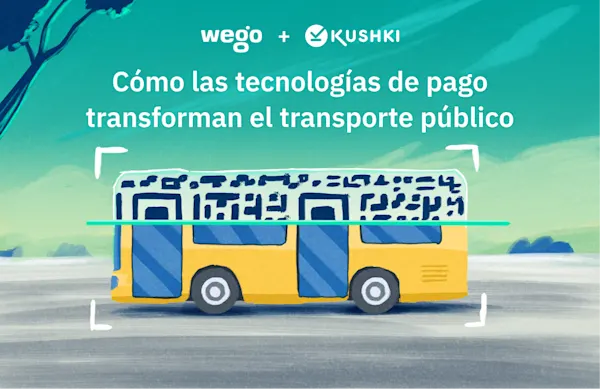
Currently, public transport is a fragmented and neglected market niche in Peru, where carrier companies do not have the technological infrastructure to control their operations and efficiently manage money collection, according to Roberto Chávez, Wego's CEO. As a consequence, the money collected is stolen, time is wasted daily when counting cash and, due to the current situation, passengers and drivers are afraid of using physical money because it is a transmitter of the COVID-19 virus, in addition to the decrease in tickets sales. Likewise, the Peruvian Ministry of Transport and Communications (MTC, in Spanish), decreased by 80% the frequency of public transport in Lima and Callao in March 2020; which has been gradually reactivated with the compulsory compliance of strict health protocols. Therefore, it is necessary, especially at these times, to maintain an adequate and efficient control of the revenues generated, and the use of contactless payment methods. This is why Wego was created, an APP designed to pay public transport by using QR codes, supported by the Kushki payment suite, seeking to transform culturally and digitally public transport in the region, in order to generate a safe, efficient and high quality transport ecosystem. Understanding the Problem Wego founders are frequent users of public transport in Lima, Peru. They wanted an efficient, safe and high quality service. However, this was not a widespread service because many processes were still manual and technological tools were scarcely used by transport companies, whose current solutions are not comprehensive and do not integrate operations, money collection, and fleet administration. For this, Wego founders, using their previous experience in digital transformation for solving problems at different industries, decided to create a solution to help transport companies to improve their processes, optimize their services, and allow their passengers to enjoy their daily trips comfortably. Digital Transformation Is, and Must Be, Cross-Sectional To make Digital Transformation possible in public transport, it is necessary to involve the whole ecosystem. For this, Wego decided to create a comprehensive solution that engages bus owners and transport companies, drivers, and passengers. Converting a highly operational and manual service into a much more efficient and more profitable business. On the other hand, our Kushki payment platform allowed them to enable credit and debit card payments, for single and recurring payments, as well as cash payment, by using a technological tool that supports each one of these stakeholders. Thus, carrier entrepreneurs will have access to a web platform that helps them to monitor money collection for tickets sales, or the administration of their vehicle fleet. Bus driver are equipped with a collection and registration system for ticket selling, supported by hardware; and the passenger has an app that is continually updated, which can be used to pay tickets without having any contact, and soon, it will provide much more information. As a result, transport companies are efficient, profitable, safe and provide a better service. But this does not stop there, payment digitization in public transport companies allowing for payments through QR or NFC technology in Peru brings along an immediate banking of its money collection process, which enables access to bank credits for renewing their fleet and stay active in the business at this difficult moment for the industry. Now companies of this sector will be able to leverage the large amount of existing data, that, after being processed by Wego, might be used to make better decisions, optimize the operation of their vehicle fleet and manage their business from any smartphone or laptop and at any location, accompanying them in the constant daily trips that they must do for fulfilling their daily tasks, as Roberto Chávez states. Finally, all this generates an improvement in the quality of the public transport service, which becomes an incentive for citizens to use mass transport, and, in turn, generates a direct impact by decreasing the use of private vehicles and helping the environment. Regional Expansion Plans R. Chávez states that urban public transport systems in countries such as Mexico, Colombia, Chile, and Peru is similar, and because of the pandemic, contactless payments are experiencing an increase in their acceptance. For this, Wego considers that expanding their solutions to a system of electronic payment collection and fleet administration for public transport is a viable plan in the next few years. However, at this moment their main objective is to position themselves in Peru, and then head for countries such as Mexico or Chile, where we will be ready to support them with our products in their expansion process.
Avatar img
Stella Vargas
Líder de contenido @Kushki
octubre 19, 2020

The fight against money laundering: This is the international story and the case of Colombia

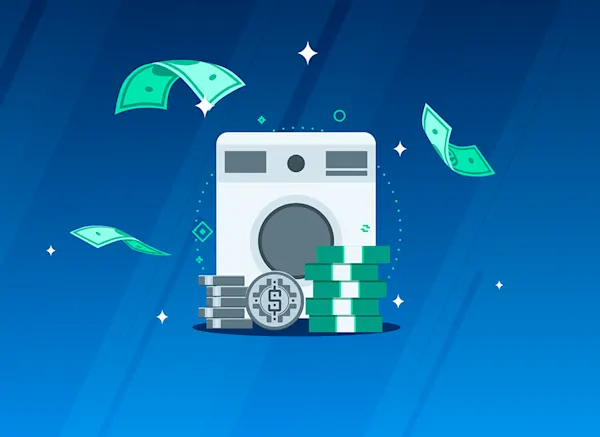
Many of us have seen the series and movies that show the history of criminal groups and how these networks launder large sums of money. The truth is that these scripts are not completely removed from reality, and it is that when illegal activities are carried out, the immediate need to camouflage the origin of all those funds and to make them unnoticed by the auditors also emerges. Many of the cases are concentrated in the region: Latin America and the Caribbean are at the riskiest ends of the Anti-Money Laundering Index 2020, published by the Basel Institute for Governance, a study center located in Switzerland. The history, though, started much earlier and more to the north of the continent. In 1920, the term “money laundering” began to be used when American mafias created networks of laundries to hide the origin of illegal funds that came from criminal activities. For these groups, led by some of the most famous gangsters, such as Al Capone or Meyer Lanski, the reason was simple and without much science: Since most of the laundries payments were made with cash, it was the easiest way to camouflage money and not to be able to track all of its origins. The starting point What is the problem based on? All starts with the principle that, what is born unlawful or unlawfully acquired, may never be lawful. At the most, it could achieve a certain appearance of legality. The States of different countries prosecute money laundering based on that basic principle. In 1970, a normative effort against money laundering was inaugurated in the United States. It was the so-called Bank Secrecy Act. Until that moment, criminals had learned to easily tap confidentiality to hide all types of activities. The American Congress raised its voice, and the duty to know the customer was established, report transactions and monetary securities, to name a few, was enacted. All that, accompanied by sanctions if not fulfilled. A little later, in 1973, President Nixon created the mythical DEA (Drug Enforcement Administration), which is pictured in many big-screen productions. That same year, Time magazine published an article that pointed to Colombia as “the new drug hub”. Journalist Alberto Llera claimed that, from the coffee country, drugs were distributed to Jackson Heights in New York. Colombia and Money Laundering It turned out that Time magazine was not very wrong. In Colombia, drug trafficking was taking force in the 1980s and 1990s. One of the world's most famous drug trafficking kingpins was Pablo Escobar, the Medellin cartel's head. According to international figures and estimates, it is estimated that the Colombian came to be among the ten richest people in the world. In the Colombian criminal code, anyone who acquires, safeguards, invests, transports, transforms, stores, preserves, protects or manages assets that have a mediate or immediate origin in criminal activities, such as smuggling of migrants, drug trafficking or terrorist financing, Among many other crimes, might be subject to a sentence from ten to thirty years of imprisonment, and a fine from a thousand to fifty thousand enforceable minimum monthly legal salaries; that is, any person who is involved in the chain that is used to launder money, knowingly or not, can be affected. Therefore, every October 29, the National Day for the Prevention of Money Laundering and Terrorism Financing is celebrated in Colombia. The event is organized by the Bogotá Chamber of Commerce, the United Nations Office on Drugs and Crime, and Responsible and Safe Businesses (NRS in Spanish), as space to nationally promote anti-money laundering culture and education. At Kushki, we endorse the National Day for the Prevention of Money Laundering and Terrorism Financing. Latin America in the Crosshair In the year 2000, the Latin America Financial Action Task Force (Galifat in Spanish) is created to tackle money laundering, the financing of terrorism and the proliferation of weapons of mass destruction. The entity covers 17 countries in South America, Central America, North America and the Caribbean. In 2019, they released a Money Laundering Regional Threat Report. On it, seven current threats were identified: Illicit trafficking in narcotic drugs and psychotropic substances Illicit Cross-Border Transportation of Cash Tax Crimes (direct and indirect taxes) Participation in organized criminal groups Smuggling (including taxes and customs charges) Corruption and bribery Trafficking in Human Beings and Migrant Smuggling Also, the Anti-Money Laundering Index AML 2020, of the Basel Institute of Governance, evaluates the vulnerabilities of countries and their capabilities to react to these crimes. Scores are calculated based on data from large institutions, such as the Financial Action Task Force, Transparency International, the World Bank and the World Economic Forum. In the 2020 version of the report, Chile's score reached 3.82, being placed at 125 of 141 countries, being the best evaluated in Latin America and the Caribbean. Venezuela and Mexico were some of the worst rankings in the region, falling in the “high risk” section, with scores of 6.56 and 5.20 respectively. What do we do in Kushki to fight it? In the world, approximately two trillion dollars are laundered each year. That's why in Kushki, we are very aware of the threats that this activity entails for our region. We have a risk management system to prevent money laundering and terrorism financing. We ensure that we know our customers, and verify that they work transparently, in a way that can detect any type of behavior that is out of normal. If this malpractice was easy to attack only by controllers, it would already have been ended years ago. Unfortunately, it is not so, and the techniques are becoming sophisticated year after year, so it is necessary for each link in the chain to do its part.
Avatar img
Magdalena Ovalle
Líder de Comunicaciones Internas @ Kushki
octubre 13, 2020
From startup to scale up: How the entrepreneurial mindset helped me scale a business