Digital payments: An ally for the insurance industry

Avatar img
Magdalena Ovalle
Líder de Comunicaciones Internas @ Kushki
febrero 08, 2021
Lectura de 2 minutos
Digital payments: An ally for the insurance industry

Digital payments: a strategic ally for the insurance industry

Last update: May 2025

Historically analog, the insurance industry has undergone a radical transformation thanks to technology. In particular, with the arrival of insurtech companies, which combine insurance with technological innovation to offer more agile, personalized, and digital experiences.

This disruption has reshaped user expectations. According to the World Insurance Report 2024, the new equation of trust in the sector is based on two key factors: a seamless digital experience and recommendations from other users. In addition, there is a growing preference for non-traditional insurers, especially among younger, more digitally savvy generations.

Why is this relevant?

Globally, the insurance sector remains a key part of the economy. By 2024, the estimated value of the industry was US$6.2 trillion, with North America, Europe, and Asia leading the market.

In Latin America, although penetration remains low in comparison (with average annual spending per capita of around US$320, according to Swiss Re data), growth opportunities are significant.

The insurtech ecosystem in the region continues to strengthen. According to the Latam Insurtech Report 2023 by Digital Insurance LatAm, there are more than 450 active insurtech companies in Latin America, with Mexico, Brazil, Colombia, Argentina, Chile, and Peru as the main hubs of innovation.

In addition, during 2023, US $9.3 billion was invested in insurtech globally, reflecting the continued interest in digitizing the insurance industry.

Who will be the winners?

Among the more than 800 active insurtech companies globally, three main models stand out:

Enabler

They provide B2B solutions to digitize processes within traditional insurance companies. From risk analysis platforms with artificial intelligence to APIs to integrate real-time payments.

Partner

They operate in partnership with established insurance companies. Insurtech companies provide the technology, and insurance companies provide operational and legal support.

Challenger

Licensed insurtech companies that offer products independently. They compete directly with traditional insurers, often with 100% digital offerings.

Investment in technology has been key: in 2023, the industry allocated more than US$225 billion to digital transformation, prioritizing areas such as payments and automation.

The importance of digital payments

One of the most critical points in the customer experience continues to be the payment process. Insurers are focused on fully digitizing and automating this stage.

According to Celent's Insurance Digital Payments 2024 report:

  • 78% of insurers plan to automate their collection and payment processes by 2026.

  • 61% prioritize eliminating the use of checks in the next 24 months.

In addition, the payment experience directly affects customer loyalty. In a survey by VPay and PYMNTS.com, 97% of consumers said that speed and simplicity in payments are decisive factors in continuing with an insurance company or switching to another.

There are also operational benefits: processing a check can cost between US$5 and US$18 per transaction, while digital payments can reduce costs by up to 60% and speed up response times by 80%.

More risk, more policies

Crises tend to trigger greater interest in insurance. During and after the pandemic, there was significant growth in health, life, mobility, and cybersecurity policies.

Allianz Partners reported a 240% increase in demand for international health insurance between 2020 and 2023.

In this context, insurers need to respond quickly. This is where digital payments play a central role: they enable policies to be issued in minutes, automate collection, and process reimbursements without friction.

Conclusion

The future of insurance in Latin America depends on its ability to digitize. And within that transformation, digital payments are a strategic necessity.

Insurers that are committed to improving the user experience, optimizing their operational efficiency, and integrating modern payment solutions will be better positioned to gain market share, build trust, and retain their customers.

Want to transform the payment experience at your insurance company?

At Kushki, we help insurance companies in Latin America digitize and optimize their payment processes, improving the customer experience and reducing operating costs.

Let's talk and discover how we can help you take your operation to the next level. 👉 Contact us here

Be the life of the party with the latest information on digital payments.

Subscribe to our Kushki Hub to receive alerts about our new content.

Suscribe illustration
Don't know which product is right for your business?
Does the world of payments catch your attention?

More about our kushki Hub

Trends that will impact the payment industry this 2021

Trends that will impact the payment industry this 2021

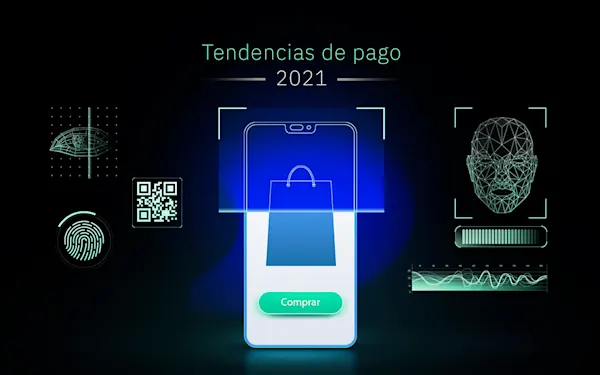
2020 surprised us all since the beginning of the year, when it brought a global pandemic with it. But the surprise gradually began to be positive for the digital payments' industry, since the number of people in the region that performed online transactions doubled, rising from 45% to 83%, according to Mastercard and Americas Market Intelligence. The explanation is simple: Quarantines forced people to make online purchases, leveraging payment fintechs, which grew exponentially. What we thought that this 2020 was going to happen with payments, accelerated tremendously, and gave way to new trends that experts expect for this period: More contactless payments According to a Visa international study, 39% of micro and small companies have started accepting contactless payments in recent times, slowly leaving cash. It is expected that this year, the number of people that prefer contactless payments continues to grow, even when the pandemic is over, since the awareness that it is safer and more hygienic has already been settled among the population. In that respect, virtual wallets that are used in mobile phones also gain relevance. Cards of the future Security in transactions is an increasingly present concern in consumers. In that line, tokenization of payments has been growing in popularity. With this technology, card data is transformed into an encrypted token, which encrypts the account numbers under a numerical code, thus guaranteeing the safety of the purchase. In the world, some institutions have taken the topic further, and have started launching credit cards without numbers or data, as not to compromise user security. Instead, they have a QR code on the back of the card, which has all the data necessary to make a transaction, but more confidentially. Invisible payments In the United States, it is already a reality in some stores, such as Amazon Go, which is an innovative system where the customer moves around the store with a kind of smart basket, which is processing the codes of products that enter the cart, and loads them to the person's account, that is to say, to his/her credit card. The sequence is finished when the customer leaves the store and payment is processed. The prediction, according to Juniper Research, estimates that this type of payments will reach USD 78 billion worldwide by 2022. In China, Alibaba already has this system in place. Europe does not remain behind, and already has companies launching pilots of this purchase model. Data power With more and more online processed transactions, fraud opportunities increase. According to data from the Cybersecurity Report 2020 of the Inter-American Development Bank (IDB), damage for cybercrime —including fraud— will reach USD 6 billion in 2021. As hacker techniques become sophisticated, our ways of defense should also do so. It is expected that more big data, artificial intelligence, and machine learning in fraud issues start being used to identify the buyer behind each transaction better. According to experts, predictive analysis delivered by these tools is becoming an increasingly effective way for payment companies to examine their security and compliance systems. Face as a password Facial recognition payment or even beyond, eye retina recognition, are among some of the most futuristic payment developments. This biometric technology is already used in places such as the Moscow subway and stores in Asian countries. Although we are still far from reaching these technology levels in Latin America, it is a good example of how payment innovation can achieve more agile and safer transaction mechanisms. Payment as a Service or PaaS More Payment as a Service or Paas services will emerge for 2021. What does this mean? It refers to when banks and financial institutions subcontract the technology and operations of their payment platforms, to boost digital innovation, stay competitive, and reduce their operating costs. Among the benefits that experts highlight from this model, is a 50% reduction of cost when managing processes, and the fact that Paas platforms are constantly updated, versus bank processes that do it every several years. As we can notice, cash is less and less desired by people, which are moving to faster, safer and more hygienic digital means. Thanks to the pandemic, the world has evolved to different ways of paying with the lowest possible contact. This has facilitated that the card and fintech industry, to have a significant growth in the world, being also exponential in LATAM. In addition, new technologies have been created, which today facilitate the purchase without the need of people paying in counters, or moving away from the comfort of their home. Not to mention progress in protecting digital transactions with biometric methods and artificial intelligence. Also, nowadays, banks take fintech as a strategic ally that helps them to increase volumes, having safer transactions, innovating in a more agile way. This leads us to think that we are in a world that migrates, and radically migrated, to faster and more contactless transactions in the last 14 months, and will continue to evolve, giving more facilities to end consumers.
Avatar img
Andrés Obando
Head of Payment Partnerships @ Kushki
enero 29, 2021
UX/UI: What 2021 brings us

UX/UI: What 2021 brings us

Each year, a list of new trends in User Experience and User Interaction make their appearance in our industry by creating challenges for designers and developers, to correctly implement them and harness their features. Part of our work is to know how to identify which of them we can implement according to the sector's need where we are working, since, when trends are saturated with use, these become inefficient. This time, we will highlight some trends, which, in our opinion, can serve to improve the user experience in the financial sector this year: Dark mode in design Since recently, various brands such as Instagram, Apple and Android give their users the possibility to choose the dark mode as a visual alternative in their devices, and therefore, it has become one of the trends that have more influence this year. Why this happens? Dark mode allows highlighting elements within a design, and highlighting certain features, keeping them legible even in little light environments. In addition, it allows saving battery for devices, reducing visual fatigue. Therefore, there is no doubt that this trend comes to give our users greater comfort when browsing through the interfaces we present to them. However, we must pay attention to the very long text content, since it can be difficult to read in dark mode and, be contrary to accessibility criteria, causing visual fatigue. Convince with words This year, the role of UX writing in product development will be essential to achieve a voice tone that is consistent, personal, reliable, and generates user connection. Good storytelling allows the brand to be memorable, concentrating on the value it can offer with the product. Likewise, aside from allowing end-users to identify the voice of the brand, it also does for stakeholders and internal users, since it encourages the creation of the organization's identity. Therefore, this year, UX Writers will focus on creating informative content that captures users, while transmitting personality and accuracy. Contactless interactions One of the trends that has been generated and has marked its continuity throughout the pandemic has been the various interaction methods with our devices without contact as such. Voice assistants, control through gestures, non-contact payment operations, these new ways of interacting have gained life, and will remain an important part of our day-to-day activities, not only because it allows personal care given COVID-19, but also because it is part of the next accessibility level that can be integrated into the use of smart devices. What awaits us? Starting with health care and the several methods that we have adopted for this (remote work, telemedicine and contactless applications, among others); we have a year with many challenges to face in our industry, where the UX role is included to propose solutions that not only adapt to the environment, but which are also part of its evolution.
Avatar img
Danelly Sotomayor
UI Lead @ Kushki
enero 21, 2021
Justo and Kushki: Together for a more comprehensive delivery system

Justo and Kushki: Together for a more comprehensive delivery system

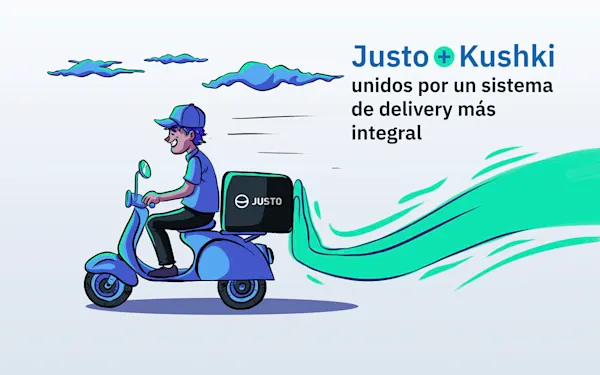
Returning the control of their processes, their brands and customers to businesses, so to increase their profitability: That is the objective of the Chilean Justo delivery platform. As their name says, they seek to deliver fair and clear terms for businesses that need to implement order delivery systems. Since its founding in 2018, and despite entering a market where other big players such as Rappi or PedidosYa already existed, their formula has exceeded expectations: They have more than two thousand operating premises today, adding new ones each week. “Thanks to technology, consumers have become more demanding with brands. They have a much higher negotiating power than before, and that makes companies be constantly living challenges. In terms of attention and quality, users demand super customized and immediate service. As companies respond to these requirements, the other market players have to adapt too,” says Nicolás López Jullian, founder and CEO. To make their formula work, Justo joins the three most important pillars to make a business grow: e-commerce, delivery and digital marketing, creating a self-managing comprehensive platform, which allows thousands of businesses to be able to sell online, deliver orders, and position their businesses in the long term. Payments and their key role within the equation In the vision of Justo and its customers, payments play a significant role. “It is important for our customers that their online sales platform has fair and secure payment gateways, both for them and their final customers,” Nicolás López Jullian explains. In that line, they emphasize that, with a gateway such as Kushki, they prevent frictions at the minute of the purchase. Justo started in Chile, but they have been rapidly expanding to Peru, Colombia, and Mexico, intending to reach new countries in 2021. It is that point, which also made them to value working with Kushki. “It is a gateway that not only allows us to be assured in the process, but also supports us throughout Latin America,” they say. In addition, Justo moves fast, so an easy and fast integration is another plus when launching operations in new locations. Not least, they also highlight service. “Kushki keeps a constant monitoring about Justo's transactions, intending to care for the businesses and the information of all participants,” says López. The costs, simplicity in integration, and the quality of developer documentation, are some reasons why they would recommend Kushki. “Also, given their closeness and excellent disposition to team work with their partners,” Araneda says. The future by Justo According to the founders of the platform, consumption habits change day by day, and the fact that more and more, we want to buy in a faster and more comfortable way no longer shames anyone. Delivery commerce that, with the arrival of the pandemic, accelerated by obligation, today becomes a habit established in our lives. “Today, delivery is already considered as one of the favorites' consumer purchase means, since it allows them to allocate more time to other tasks. It is a system that will stay for many more years, but it will have to be adapted to market needs,” Nicolás López explains. For the same reason, demands by the final customer will continue to appear, such as friendly packaging, better response times, greater flavor quality and better purchase experiences. And not only for customers, they claim from Justo, but restaurants are also very expectant for new consumption habits and technologies that allow them to have a differentiator in their sales processes. Beyond delivery, and coinciding with Kushki's view, on the order platform they believe that changes in the online sales category are coming. “There are many processes that, although we return to face-to-face, we are still going to continue to prefer. For example, contactless. Regardless of whether the pandemic is ending, we already have the sound in our heads, that we have to take care of ourselves, avoiding unnecessary contacts with third parties, so consumers are surely going to start demanding that their favorite shops give them this purchase option,” the CEO says. And there, they consider that a good payment experience will be gaining more and more prominence: “The easier, quicker, and safer it is to be able to pay in a business, the better the experience will be for this contactless face-to-face purchase system.”
Avatar img
Magdalena Ovalle
Líder de Comunicaciones Internas @ Kushki
enero 15, 2021