Payment gateways, why having one?

Avatar img
Magdalena Ovalle
Líder de Comunicaciones Internas @ Kushki
diciembre 30, 2020
Lectura de 2 minutos
Payment gateways, why having one?

They were born as an optional attribute of shops during the 1990s in the United States, but have gradually ceased to be so optional. Payment gateways are platforms that allow merchants to accept online payments easily and safely, the same payments that, with the Covid-19 pandemic, became the only option to purchase goods for supply.

Its qualities go far beyond being safe and practical, in addition to the ease for customers, having a payment gateway to sell online can bring multiple benefits to shops. Here we tell you about some of them.

Support and attention to customers

With the high flow of online transactions managed today, payment gateways must be robust enough to support all that burden. With the pandemic, digital payments have been installed as favorites in almost all countries. According to Visa data, the winning payment method in Latin America was the debit, with 72%.

With money flows moving from one side to another, it is important to have a payment gateway that provides proper support and attention to shops in case of failures or intermittencies.

Security against fraud

Latin America is one of the most fraudulent regions worldwide: On average, 8% of transactions are canceled on suspicion of fraud, which almost doubles the European average, according to Riskified data. For the same reason, it is relevant that a payment gateway has the PCI DSS certification, a regulation that accredits the security standard of major card issuers, such as American Express, Mastercard , and Visa. In Kushki we are aware of this reality and it is for this reason that we have the highest current certification in the industry: PCI DSS Compliance level 1.

A surprising data obtained by Verizon is that, of companies that process information from debit and credit cards, only 36% keeps its PCI DSS program active, according to 2019 figures. A fifth (18%) of the surveyed organizations does not have a compliance program. This can affect the number of customers, since according to figures of the same report, 69% of consumers would be less interested in choosing a company that is a victim of data leaking or that has not safe policies.

Consumer first

It is not new that customers, especially younger generations, are becoming more and more demanding and strict with payment processes. First, they seek that transactions are as frictionless and as fluid as possible. With a payment gateway, it is possible to incorporate more payment methods, such as credit and debit cards, transfers and even cash payments. All that in desktop or mobile payment formats.

Also, with the tokenization of debit, with Kushki, it is possible to create recurring or subscription payments, as it can be done with credit cards. In fact, according to a Gartner study, subscriptions are the future: It is predicted that 75% of organizations will offer services of this type to their customers by 2023. For the same reason, it is not wrong to advance, and choose a gateway that allows making this type of charges.

24/7 availability

It is estimated that 40% of purchases in e-commerce are impulsive. As for the baby boom generation, because if we talk about millennials, the figure rises to 42% of people who have made purchases by impulse in the last month. If we consider the entire life, 83% of people admit having done it once.

A digital payment gateway is available 24/7 to satisfy those needs that exist in the population. This can lead a business to increase its sales, especially in times of pandemic.

Quick and easy integration

Despite being a generation of almost digital natives, few people are those who can really say that they know how to schedule in some code or computer language. For that same reason, the integration of a payment gateway must be as quick and simple as possible.

In Kushki, we have an API and plugins for the main e-commerce systems such as Magento, Woocomerce and PrestaShop. Industry times are quick, and one should not stay behind or miss important events such as Christmas or Cyber Day; the faster the integration speed, the easier it is to go to the market.

Greater control and centralization

With a payment gateway, the business can have all the information of its payments in one place, which helps it with management and money reconciliation issues. On the other hand, having a payment gateway for making digital purchases, allows the business to have full control of the purchase process, minimizing problems and improving customer attention.

According to figures of the National Consumer Service (SERNAC) in Chile, almost 90% of people who have bought on the Internet in that country admit having had some type of problem during the transaction, increasing claims by more than 200% in the pandemic period. For the same reason, it is vital to ensure not to follow the trend, by having a payment gateway that works without interruptions, allowing to monitor the whole process.

Those are only some benefits of having a payment gateway, among many others. In a world as connected and competitive as today, it is important to have one of these platforms and not be left out of the digitization bandwagon.

Be the life of the party with the latest information on digital payments.

Subscribe to our Kushki Hub to receive alerts about our new content.

Suscribe illustration
Don't know which product is right for your business?
Does the world of payments catch your attention?

More about our kushki Hub

Do your customers get their Christmas stolen? Tell them how to prevent it

Are your customers wary of Christmas shopping? Do your customers mistrust Christmas purchases? They are probably not the only ones. We are a few days away from celebrating two of the year's most important Christmas and New Year festivities. On this occasion, our company and family dinners and Christmas purchases will not be the same as in previous years, giving way to distractions that can result in exposure to cybersecurity dangers related to cybersecurity. Figures show it: During this year and in the pandemic period, there was a 59% increase in the number of complaints about computer crimes in Colombia, according to the register of the Cybernetic Center of the National Police. In Chile, NovaRed company detected a 40% increase in computer crimes during February and March this same year, with a 90% increase only in the phishing method. In the current scenario, it is natural to spend our days with several connected mobile devices (laptops, smartphones and tablets), which allow being in contact with our families, participating in events, making our purchases and for leisure moments. Therefore, Kushki wants to provide a series of recommendations that you can offer your customers to stay alert and avoid being another victim of these cybercriminals. Make sure that the business and the website are safe before buying One of the main methods cybercriminals use, is to send attractive offers, which are very difficult to reject. For this, your customers must research the company, the product or service that is the subject of this offer, where previous users have validated the veracity of these. Use recognized gateways and payment methods Something critical to consider is the payment gateway that they are going to use to make their payment, since this one will be in charge of processing the financial confidential data. For this, Kushki is an excellent option, since it is a recognized gateway in the industry, and the largest shops in the region operate through it, providing them with security in data processing through their PCI DSS certification. Never disclose more information than necessary One must be cautious: Never provide card information data, financial accounts data, or passwords through phone calls to people who claim to be part of a financial institution. Similarly, refrain from doing it with shops where purchases have been made. Monitor financial transactions It is important to verify all consumer notifications that financial institutions send, from the smallest amount to the highest amount of money. A technique used by cybercriminals is to make minimum charges to avoid being detected. Keep all devices up-to-date Update periodically all technological resources that are used to make online purchases. This way, your customers ensure that the system is operating at 100% and is not prone to errors or data leaks. Act fast If financial information or card data is suspected of being compromised, your customer must immediately contact the financial entity to update them. Handle the credit card correctly For being responsible and cautious with the use of the credit card, it is important to observe the following recommendations: Limit use amounts Limit uses abroad Activate consumption notifications, indicating the time, date, amount, and company where it was made Save the confidential data of each card Never provide information such as the card number, the expiration date or cvv code through calls, social media or email. Just as your customers must be careful, you, as a business, must also take certain precautions. Make sure to keep all your protocols up to date to prevent fraud in these holiday periods. Choosing a good gateway and establishing clear security rules is a good start.
Avatar img
Christian Cuenca
Information Security Officer @Kushki
diciembre 21, 2020

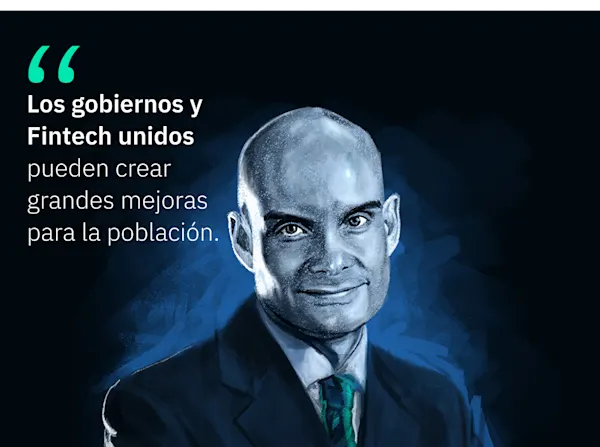
How governments and fintech companies can join in a collaborative way?

Slow and bureaucratic. That is the perception that has existed historically about public institutions and the formalities that are conducted through them. A sector that until recently had not been digitized, and that has not yet dimensioned the full benefits of doing so, nor has it counted the savings in the amounts of money and time that digitization could bring. But that pace has already been accelerated, because the pandemic has put face-to-face formalities at risk, forcing to make them available online. According to data from the Inter-American Development Bank (IDB), a face-to-face procedure costs governments up to 40 times more than a digital procedure, given the resources that must be available. Also, it takes an average of 5.4 hours for a citizen to do a procedure, and up to 11 hours in some countries. In contrast, a digital process can take up to 74% less of that time. In the European Union, 81% of procedures are online. In our region, only 7% of the population performed its last process digitally way. Data from the Economic Commission for Latin America and the Caribbean (ECAC), position the region at an intermediate development level in respect to other regions of the world in terms of a digital ecosystem. With an index of 49.9 (on a scale of 0 to 100), Latin America is lagging compared to Western Europe (71.06) and North America (80.8). In addition, the annual growth rate in digitization has also been slowed, growing by 6.21% between 2014 and 2018, the lowest of all emerging regions. Some utilities already offer digital payments for procedures; however, dissemination is low, which does not encourage its use among contributors. In addition, many public portals are complex and user-unfriendly, which derives in a low conversion of transactions, and a delay compared with the different public administrations systems of the world. In fact, ID figures point that 40% of digital formalities are very difficult to understand and cannot be completed. The opportunity In Estonia, a leading country in terms of State digitalization, 99% of formalities are made online. One of the main advances are digital signatures, which are used 1.3 million times per week. According to the Government of that country, thanks to that, they save a working week per person per year or 2% of the Gross Domestic Product (GDP). Other of its advances, have included eliminating the use of paper in procedures, implementing the digital vote, creating virtual residences or e-residencies, and even a digital identifier since a person is born in that country. All that makes it clear that there much to advance and to imitate from the countries that take the lead and are more developed in this topic. The digitalization process of the public sector has a series of associated benefits: Advances can be reached in an agile and short-term term fashion, with an immediate positive perception and satisfaction of citizens. That is to say, they are measurable and testable in quick deadlines. Also, the introduction of technology in the public administration generates less corruption, since everything is registered, there is less commuting and vehicle traffic, less pollution and environmental impact, and administrative efficiency with lower costs and bureaucracy. A technological partner In Colombia, Sushi digitalized the process for obtaining the Property Transfer Certificate, issued by the Superintendence of Notaries and Registry Offices (SNR). This certificate is required for a series of formalities in Colombia, and provides all the information about the property and its owners. Its demand is high: Between 23 thousand and 75 thousand certificates are issued each day, because it is required to buy or sell a property and apply for mortgage credits, among other things. With Sushi, SNR users can digitally acquire theircertificates, saving time and money in commutes to offices. Obtaining the certificate with this method takes less than a minute. Another case is the Sole National Transit Register (RUNT), responsible for delivering cars' vehicle records. Through the alliance with Sushi, it is now possible to pay for the document with cards and the PSE, expanding the available payment options. The virtual counter In Ecuador, the Municipality of Guayaquil has also started to digitalize with our solutions. Payment of the property tax, a mandatory levy that is charged once a year for each property, can now be made online through a portal with a payment button specifically developed for this entity. The user accepts the payment of a fee for the use of the service, but that equals time-saving and greater comfort. For the implementation of this project, we have a multidisciplinary team of experts in the online collection, safety and payment experience industry. The current situation of the pandemic worldwide, has enhanced electronic commerce, and also the digitalization of public entities that seek to approach their users easily and safely. State Transformation In November 2020, the Sixth Ministerial Meeting of E-Government of Latin America and the Caribbean was held; where it was exposed that Ecuador has achieved substantial changes in digital transformation, rising 10 positions regarding 2018 in terms of application of E-Government at a global level (74th out of 193 countries). Currently, the country records more than 70% of online formalities of the Central Government, and it is expected to be 90% by May 2021. Although the Cisco Digital Readiness Index 2019 ranked Chile as the most digitally ready country, followed by Uruguay and Costa Rica, countries of the region are still in a fairly low position regarding the global level, which shows that there are still unattended needs to solve by collaboration between fintech companies and governments.
Avatar img
Álvaro Maldonado
Gerente Comercial @ Kushki Ecuador
diciembre 17, 2020

Double diamond methodology for user experience design

Today, most companies seek customer loyalty and to generate conversion through the sale of their products in online stores. This positioning depends on many factors; one of them is the design of user interfaces, which covers the visual aspect of a platform (being attractive), as its usability and usefulness, thus the importance of a UX designer. In this article, I will tell you about what user experience design is, the methodology we use in Kushki, the challenges we have faced in the process, and the reason why we choose to apply the double diamond methodology. The easiest way to explain what a UX Designer or User Experience Designer does, is by sharing an example, something that you have probably lived and become familiar with: Imagine that you are on a website that sells shoes, intending to buy a pair of sneakers with specific features. You already have what you want, so when heading to the sneakers section, you start searching the “filter” button to facilitate your search, but you do not find it anywhere. After seeing pages and pages of the digital catalog, you finally find what you were looking for and go to the pay section. At that time, you discover an extensive payment form that you start filling out discouraged, while you think this is taking much longer time and effort than you thought. Eventually, you surrender and leave the website, and prefer to buy your shoes in another store, or simply to forget about it completely. But, why did you quit? Because your frustration with the process was stronger than your wishes to buy the shoes, that is, the user experience was unsatisfactory. And you ask yourself, what does this have to do with the UX designer? It is simple: The UX designer has the mission of converting the search and purchase process into a rewarding experience, that provides all accessibility elements with a high degree of practicality, for the user to do his/her activities on the website, in a fluid and seamless way, almost “without being aware of it”; this is what we call user experience. In other words, we define user experience design as the development and improvement process of quality interaction between human and computer, and all the aspects of a digital or physical product or service. The challenge is based on creating a useful, user-friendly product, that provides value and acceptance in its use in the shortest time possible. A designer not only has participation in the creation of a visual product, but performs a practical process of research, ideation, and finally, the development of prototypes that allow testing results. To achieve a high-quality UX design, there must be a perfect fusion of multi-disciplinary services. The Double Diamond methodology at Kushki As a team, we apply various rituals of agile methodologies to manage projects with greater efficiency, and focus on the added value of our digital solutions. For this, we use the steps of the Double Diamond framework as follows: Discover: We investigate which improvement opportunities are. In this step, we validate, with real users, which are their concerns. We ask our interviewees to give us a tour of their day-to-day activities to detect the problem, and we also certify the project's scope. Define: With the results of the previous point, an information organization process begins, with the purpose of understanding and mapping which are the required points that can solve the raised problem. In this phase, flow charts and lists of requirements are made, among other tools, which are necessary for the next stage. Develop: In this point, we focus on the visual construction of the product or feature, considering the logic and pain points identified before, that is, prototyping. We also make validations with experts, so that we can ensure that we can make the delivery with a perfect finish. Deliver: It consists of a demonstration of the properties of the features that are proposed in the prototype. Important challenges that we face in the development of the experience As a user experience design team, we worry about our solutions being reliable, useful, and friendly. As a team, we have identified three constant and fundamental challenges to consider in each solution we develop: Make the user feel safe. Not only do we have the best security certifications, but we have also implemented other measures that allow the user to have greater control and understanding in the process. For example, a preview of the configurations they wish to make, alert messages, action confirmation, information edition, etc. The objective is to help users to make good decisions, making them feel safe in the process. Speak in their language. Unfriendly and incomprehensible language can hinder the understanding of transaction processing tools. “Preauthorization and capture,” “dispersion,” “chargeback,” among others, are terms that are not commonly used, and not from the domain of people. This is why the way we communicate with our customers, is a constant and important challenge that we face as a team. To solve these possible understanding difficulties, we have numerous indications, notes and tooltips in the Customer Console, as well as the knowledge base. It is essential to talk to the user in a clear, direct and simple to understand language. Information saturation. It is very easy to confuse the user when it comes to financial transactions. The user needs to have key and concise information at hand. For this, it is essential to know him/her and his/her needs, to be able to propose solutions with an information architecture that covers his/her pain points, reducing the cognitive burden of our user. Why do we choose this methodology? One of the characteristics that we value more from this framework, is the possibility of iteration within each diamond, with the objective of approaching each time to the ideal “as if.” The intention is to have a clear problem when both diamonds converge, resulting in a positive effort-time ratio. The main benefits that we find in this methodology are: It fosters communication between teams. Goes through consultations with experts and other relevant areas. It applies for small, medium, and large projects. The framework can be implemented to find solutions to all kinds of problems. It is adaptable according to the project. It encourages us to understand which the correct methods and activities are to address a problem or opportunity. Clarity in processes. It allows defining the phases with greater accuracy throughout the development of a UX project. Finally, trust and efficiency in developed technologies are really important for the fintech world. By themselves, financial transactions consist of complex processes that require a high level of accuracy and processing speed. Our objective is that, this is a transparent, fast and secure process for the end-user. As a team, we constantly face new challenges that lead us to convert a cumbersome process into one that can develop naturally and intuitively, so we must consider experience design as a global concept that affects the entire interaction chain between brand and customer alike.
Avatar img
Andreína Medina Yáquer
UX/UI Designer @ Kushki
diciembre 07, 2020