Reflections on Payment Channels that 2020 Has Brought for us

Avatar img
Nahúm Ojeda
CPO de Kushki
junio 01, 2020
Lectura de 2 minutos
Reflections on Payment Channels that 2020 Has Brought for us

The payment methods that 2020 brings us

Although we currently are in an information world in which we are exposed every day to extreme points of view, which make our emotions oscillate between the worrying and the amusing, the cultural and the hopeful, the following paragraphs were written to share some reflections regarding the evolution and perspectives of electronic payments in Latin America.

Closing 2019, Same Shapes

At the end of last year, the adoption of digital payments in Latin America did not show significant advances. Although the growth of electronic commerce in the region has been increasing with double figures for the last 3 years (20% increase in annual sales, between 2017 and 2019), digital payments have been mainly adopted by bank users.

However, we now know that we were about to see a change in the way in which we made our payments.

A Life with Adjustments

We already know the story that 2020 has started to tell us, which demands from us a change in our daily life habits, and covers a variety of areas that involve both work and personal matters, including behavioral patterns, mainly related to our consumption habits.

First Changes

Faced with a restricted mobility environment, the first aspect that we have had to modify is the way we buy. Apart from visiting local supermarkets complying the health protocols that each country has established, we have had to adapt ourselves to buy many items online. This behavior might not have been so common for many of us, but it has become the forced solution to this situation.

This is apparent when we see all those who prepared themselves for confinement by buying equipment for exercising at home, those who built up a medical arsenal, those who filled the stock with pet food, or those who pampered themselves by supplementing their pantry with everything they needed to cook the type of desserts or dishes that give us an immediate reward, and of course, we cannot forget those who went to the section of spirit drinks.

But as some products have caught all our attention, others have lost their appeal at this moment, and they are all related to what the current circumstances are limiting us from enjoying. In this way, purchases of travel items, car accessories, and swimwear, as well as party supplies, mountaineering gear, etc.

Second Changes

After provisioning ourselves with the necessary resources to face this confinement in the best way, we have all the obligations that every household requires our devoted attention: paying primary services, bank cards, loans, taxes, governmental formalities, etc.

Before face-to-face restrictions, we have had to look for ways to pay online to be able to cope with our responsibilities to this respect. For those who were already familiar with this trend, they are doing fine. For those who were not prepared, they have had to look for some family member or friend to teach them, or learn by themselves how to make these payments.
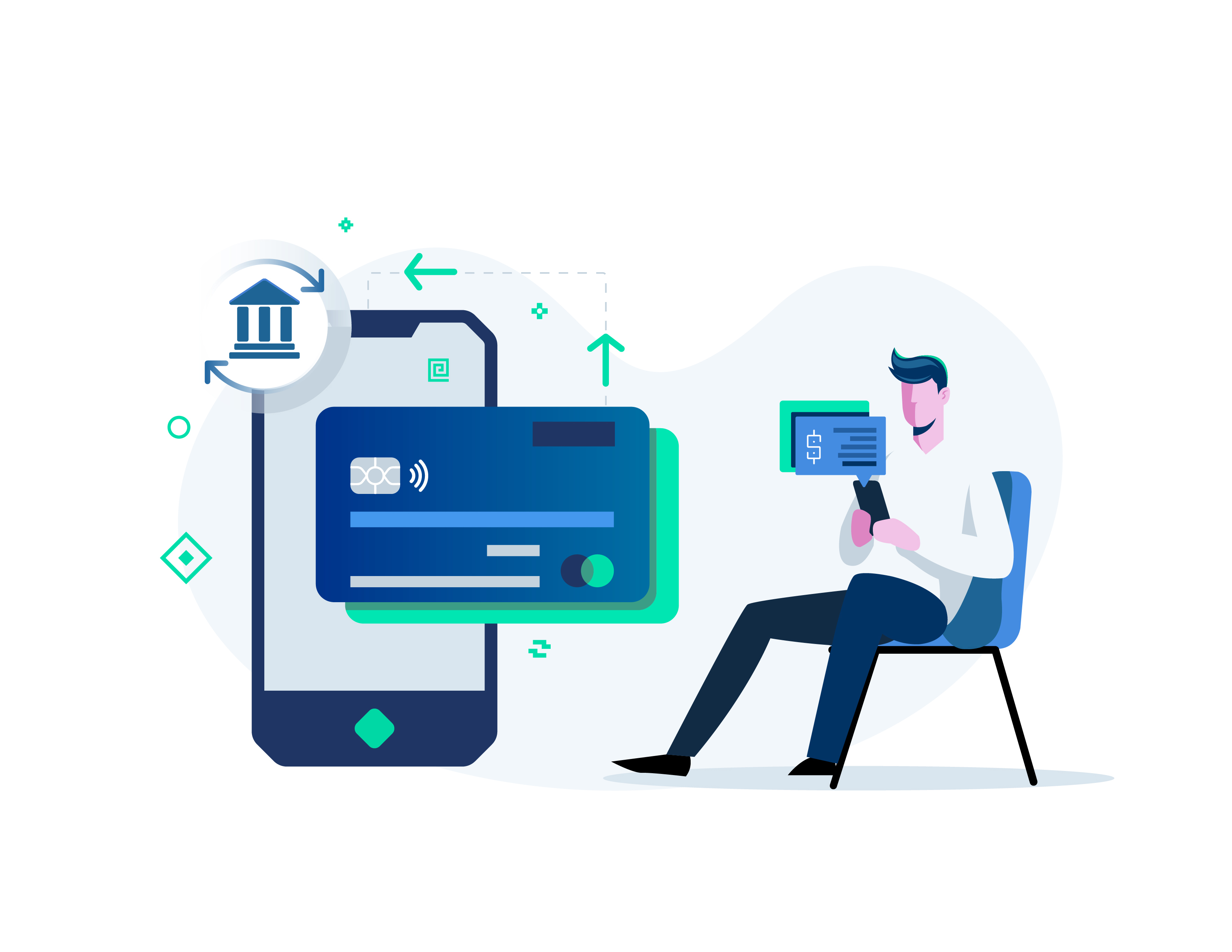
Kushki Online Payments

Forced Necessity

All businesses or private or public service providers has faced this urgent need to sell or collect resources through electronic media. Every day, companies are creating online platforms, and governments have had to modify laws and regulations to enable payments through this way.

Reality is plain. Electronic payments are no longer an supplementary option or a test channel for selling or money collection, they have simply become the most viable option for the vital interaction between providers and users.

Is Currency Dematerialization Real?

Although this scenario shows that, in the long term, we will go towards this trend, the reality of our countries also show us that there are still many challenges to face. In view of the low bancarization, the high informality of money habits, and most users' mistrust of these remote payment methods, the road will not be followed immediately. This is why today some alternatives between these two worlds (Digital vs. Cash) are gaining much ground in our markets.

Online payments made in cash in supermarket chains, convenience stores, and pharmacies, are growing at the same speed (a double-digit annually) than the adoption of e-commerce in the region. This is why we are going to see a gradual mutation in our payment habits as we advance towards trust, knowledge and protection of all users.

Kushki in Latin America.

In spite of the circumstances that affect us all at this moment, for Kushki it has been a lucky trip that has allowed us to be part of this evolution in the whole region. We have witnessed stories that engage us completely when participating in aid campaigns for the trade sectors (Peru), incorporating electronic payment methods for governmental entities (Colombia) and municipal governments (Ecuador).

This situation has demanded us to develop new methods for money collection (such as our payment links) that facilitate the incorporation of online payments without the need for an integration. On the other hand, our service indicators have multiplied and our integration area has had to increase their efforts to deal with the scale of businesses that now need, more than ever, our support to enable online payments in the region.

At Kushki, we are working to generate better solutions and payment methods, as well as agile support processes. Especially, we are listening to our customers; for them, we are striving to become the payment gateway that connects all Latin America.

Be the life of the party with the latest information on digital payments.

Subscribe to our Kushki Hub to receive alerts about our new content.

Suscribe illustration
Don't know which product is right for your business?
Does the world of payments catch your attention?

More about our kushki Hub

La importancia de ser ágiles

La importancia de ser ágiles

Quizás alguna vez has escuchado que crisis en japonés significa oportunidad, lo cual, en parte, es cierto. Realmente la traducción de crisis a nuestro idioma es: riesgo y oportunidad. Así, lo que nos pretende decir esta cultura milenaria es que, la crisis es el momento para atreverse, sacar provecho y evolucionar frente a los retos que nos impone el presente. Para aprovechar las oportunidades hay que ser ágiles. Esto implica estar atentos a los cambios y listos para afrontar situaciones adversas sin que estas lleguen a impactarnos más de lo previsto. Lo que a su vez, facilita la toma de decisiones con la confianza de tener el respaldo de un equipo comprometido. Es indudable el temor que genera para algunas organizaciones implementar la cultura del agilismo, pero este se puede reducir al contar con los aliados estratégicos indicados, que aporten valor y complementen con la experiencia que se requiere. “La transformación digital no es una opción, es una obligación” Hemos visto día tras día cómo las empresas están evolucionando porque el mercado así lo exige, y quedarse por fuera de esta transformación llevará al camino de la extinción. El comercio digital se encuentra en auge y se fortalece más cada día que transcurre. Los hábitos de compra de las personas están migrando al consumo a través de internet, donde contar con una pasarela de pagos segura puede hacer la diferencia para un negocio. Por esto, Kushki, garantiza que todas las transacciones cumplan con el estándar máximo de seguridad, al contar con la certificación PCI-DSS Nivel 1 propia e infraestructura robusta. Brindado así, tranquilidad a los compradores, al asegurar que sus pagos no estarán expuestos a fraudes, lo cual, lastimosamente es uno de los mayores riesgos de este mercado. En Kushki somos una familia 100% ágil que conoce las exigencias del ecosistema digital donde día a día surgen nuevas necesidades que nos obligan a estar listos para llevar soluciones factibles en tiempo y costo. En esta era, todo negocio que desee tener éxito debe mantenerse ágil. Pues, la agilidad crea una cultura empresarial transparente, donde todo el equipo se involucra generando una rápida capacidad de adaptación. Por otro lado, para generar resultados de calidad, las organizaciones requieren enfocarse en la mejora continua, a través de esfuerzos progresivos, tal como lo define el término japonés Kaizen, a fin de cambiar el status quo. Esto se logra mediante un mejoramiento continuo a través de pequeñas y grandes acciones de forma diaria. Es un concepto individual y grupal que lleva a cambiar la mentalidad de los miembros del equipo. Por lo que, constantemente inspeccionamos nuestros procesos para identificar oportunidades de mejora. Para asegurar agilidad en los procesos, existe una gran variedad de metodologías, entre ellas: Scrum, Crystal, XP, Kanban, etc. Cada una de ellas tiene sus propias características y puntos en común, pero lo más importante es que se pueden adaptar según las necesidades de la empresa o proyecto. Todas promueven valores como comunicación, compromiso, seguimiento y empatía en los miembros del equipo. Después de todo, un equipo unido y motivado genera grandes resultados. Todas las estrategias que puedan tomar las organizaciones encaminadas a mejorar la productividad son importantes, pero sin duda el agilismo es una opción que aporta grandes beneficios. Este requiere compromiso, ya que no es algo que se implemente de la noche a la mañana, sino una cultura que se construye día a día.
Avatar img
Rafael López
Business Analyst Lead Payments @ Kushki
mayo 25, 2020
In the land of coronavirus, technology rules

In the land of coronavirus, technology rules

Adapting to technology: a new challenge for businesses Today, citizens' health and protection have prevailed over all other variables, stopping industries and processes. Their digital transformation has steadily become (and will be, even more) a strategic ally to increase the awareness that the value chain of enterprises (whether digitally or non-digitally native) does not need to be limited to the physical world for their transactional development. After we have got over this situation, consumers will change their habits and behaviors, and companies will have to adapt quickly. Public services are not and will never be external to these changes in consumers' behaviour. We have Colombia as an example, where the SNR (Superintendency of Notary and Registry, in Spanish) understood the need for citizen-focused adaptability (as well as for ensuring operational efficiency and transactional transparency), and increased formal integration with online payment companies to leverage the opening of high-traffic channels for the issuing of certificates and the payment of taxes by citizens. In a digital, efficient way, and without generating operational costs for development, they made feasible their digital transformation, adapting to their users, opening themselves to finding the correct allies, those who understood the value proposition of their business and their consumers. This effort by a public institution such as the SNR allowed for the massive increase of IT outsourcing by an institution that seeks to serve the greatest number of citizens, and also allowed them to maintain their growth ratio by reducing user traffic at their physical offices by more than 35% (through an exclusive platform, Kushki became the main certificate seller for the SNR in Colombia, and sold more than 180,000 certificates every month for the benefit of citizens) and reducing by 7% the issuing of physical certificates. This is an indicator of the citizens' open-mindedness about using new channels with a value proposition that adapts to his/her needs. This also requires an open mind from public institutions, but also a constant work, and support from the strategic partners who always have in mind who is facing the citizen. Transaction security, coordination, and adaptability for understanding the operational flow of public institutions, as well as constant feedback to manage UX flows in these processes, are part of the transformation process in efforts such as this one. The circumstances we're living in today will, without a doubt, set a precedent in the consumption habits and business models of some institutions. Today, they have had to speed up their digital transformation processes and modify their product development strategies, all because of a scenario that changed many business strategic plans that had been established in 2019. Never before, digital transformation has had a more aggressive sponsor, and this can be seen in the reaction that each of us has shown to advance our businesses, understanding that adaptability in times of crisis involves a development work and a constant learning, which will prepare us for post-pandemic businesses.
Avatar img
Oscar Salas
Country Head @ Kushki Perú
abril 24, 2020
What is Tokenization and How Does it Work?

What is Tokenization and How Does it Work?

The purchase and payment of products and services online, is becoming more and more common and it will continue to increase. But where money goes, the criminals follow. For this reason, to reduce the possibility of fraud, chips are incorporated into credit and debit cards, making it more difficult for criminals to duplicate card data in payment points (POS, Points of Sale); and tokenization is used to protect credit card credentials when used for digital payments. Basically, tokenization is a method that converts the number of a card (PAN, Primary Account Number), into a code generated using random characters (token), to protect the payment credentials of a customer. This prevents hackers from stealing and using the information to commit fraud. Tokens protect the account number and credit card number in a virtual vault that can be transmitted without additional unnecessary risks. In order to operate, there has to exist a payment gateway that stores sensitive data, so that tokens can be generated. To that effect, payment gateways that perform tokenization, such as Kushki, must also hold a PCI DSS Level 1 certification: The highest level of compliance with the requirements established by the Payment Card Industry Data Security Standard (PCI DSS). This ensures that companies that process, store or transmit credit card data, maintain information in a secure environment. Advantages of Tokenization Tokenization eliminates or minimizes the risk of fraud and theft of the customer's private information when paying with a credit card. Tokens do not hold sensitive data, and cannot be used by any entity other than the one that stored bank credentials; so, even if tokens were stolen, they would be useless for a criminal. They preserve businesses service quality and their reputation, as they can offer security to customers when they pay. Tokens save capital and effort for businesses because they don't have to implement information controls or protection for tokens, because they do not hold sensitive data. Tokens increase trust among the general public when buying items online. If you run an e-store or are considering receiving payments online, we suggest you to seek a platform that provides your business with the necessary protection. For this, select those options that include tokenization and that possess the PCI DSS Level 1 certification. At Kushki, we maintain the highest security standards so that you can provide the best experience to your customers.
Avatar img
Stella Vargas
Líder de contenido @Kushki
febrero 04, 2020
Reflections on Payment Channels that 2020 Has Brought for us